In this article
Why so many South Florida homes have duct board
From the 1960s through the 1990s, a large share of Broward, Miami-Dade, and Palm Beach homes were built with duct board: rigid fiberglass panels cut and folded into rectangular trunk ducts, usually lined inside with a coated surface the air travels across. Plantation, Sunrise, Lauderhill, Coral Springs, and the older neighborhoods of Fort Lauderdale and Boca Raton are full of it - often still original to the house.
Duct board was not a mistake. It is quiet, it insulates as it goes, and in a dry attic it serves for decades. The problems start with age and moisture - and South Florida attics supply both, with summer temperatures that can pass 140 degrees and humidity that finds every gap.
How duct board ages
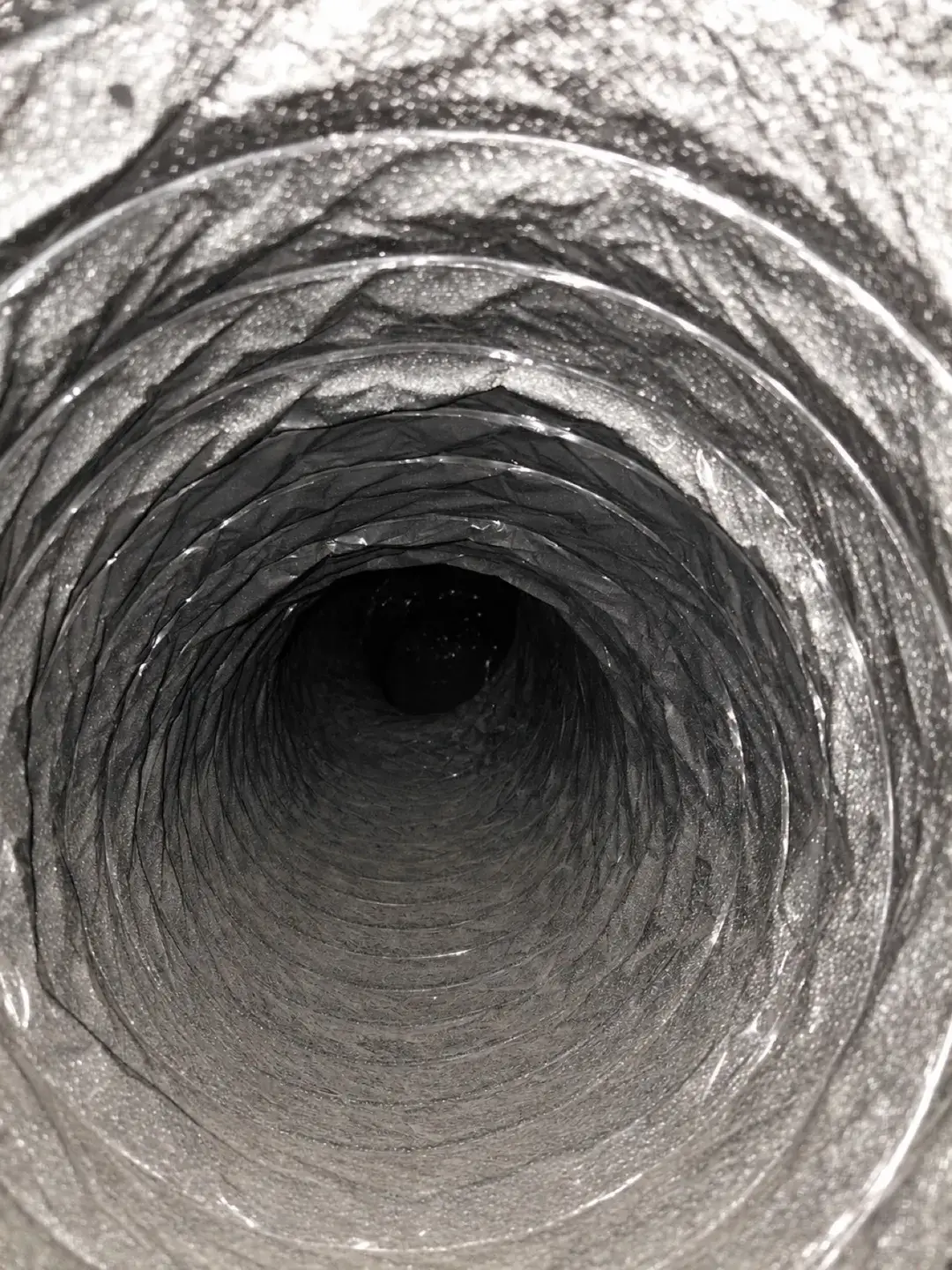
The inside lining is the whole story. New duct board has a smooth, sealed coating that air slides over and that can be cleaned. Over twenty or thirty years of heat cycles, that coating can dry out, crack, and erode - worst at joints, turns, and anywhere the airstream hits it directly. Once the coating goes, the raw fiberglass underneath is exposed: a soft, porous surface that traps dust deep in its fibers instead of letting it sit on top.
Moisture speeds everything up. Condensation from a poorly insulated joint, a roof leak, or a drain backup soaks into the board, and wet fiberglass grows mold inside the material itself - not on a surface you can wipe, but in the fibers.
When cleaning is the right call
Duct board cleans well when three things are true: the inside lining is intact and smooth, the board is dry, and the buildup is ordinary dust and debris sitting on the surface. In that condition, a professional cleaning with soft-bristle agitation made for lined ducts - never aggressive brushes that tear the coating - removes the buildup the same as it would from metal duct.
Plenty of 30-year-old duct board in dry attics passes this test. Age alone does not condemn it, which is why the decision should be made by looking at the lining, not the calendar.
When replacement is the honest answer
- The lining is eroding. If the coating is flaking, powdering, or worn through to raw fiber, cleaning cannot restore it - and aggressive cleaning would make it worse. Exposed fiber keeps trapping dirt no matter how often it is cleaned.
- The board has been wet. Mold growth inside soaked fiberglass cannot be cleaned out of the material. Wet sections need to come out.
- Runs are crushed, sagging, or disconnected. Collapsed board trunks and separated joints strangle airflow in ways no cleaning touches.
- The system is being replaced anyway. Pairing a new AC with duct board at the end of its life strands the new system behind old losses - see our page on getting a new AC with old ducts.
Replacement does not have to mean the whole system at once. Failed sections - a trunk run, the wettest branches - can be replaced while sound sections stay, and our replace-or-clean guide walks through how that decision is made.
How the call is made on an inspection
On a free inspection we open access points, look at the lining condition with a light, press on suspect sections (sound board is firm; deteriorated board feels soft and sheds), and check for moisture staining and odor at the registers. Then we show you what we found - the actual lining, not a sales description of it.
If it cleans, you get one exact price in writing for a full air duct cleaning. If sections need to go, you get one exact price in writing for air duct replacement on those sections. Sometimes the honest answer is both: replace the failed trunk, clean the sound branches. What you will never get from us is a replacement quote for ducts that only needed cleaning.
Frequently asked questions
Can you clean fiberglass duct board?
Yes - when the inside lining is intact, smooth, and dry. It must be cleaned with soft-bristle tools made for lined duct, because aggressive rotary brushes can tear the coating that makes cleaning possible. If the lining has already eroded to raw fiber, cleaning stops being effective and replacement is the right call.
How long does duct board last in Florida?
In a dry attic, duct board commonly serves 20 to 30 years. Heat and moisture shorten that - board that has been wet, or that sits in a poorly vented attic, can deteriorate much sooner. Condition matters more than age: the lining tells the story, not the year on the house.
Is fiberglass duct board a problem in a home?
Intact, coated duct board is a standard building material that has served in millions of homes. The concern starts when the inside coating erodes and raw fiber is exposed to the airstream, or when the board gets wet and grows mold inside the material. Both are condition problems with a clear fix - replace the affected sections.
What does duct board replacement involve?
The failed sections are removed and rebuilt in new duct material, joints are sealed, and the runs are re-insulated and reconnected to the air handler and registers. It is attic work measured in sections, not a whole-house project, and you get one exact price in writing before any of it starts.