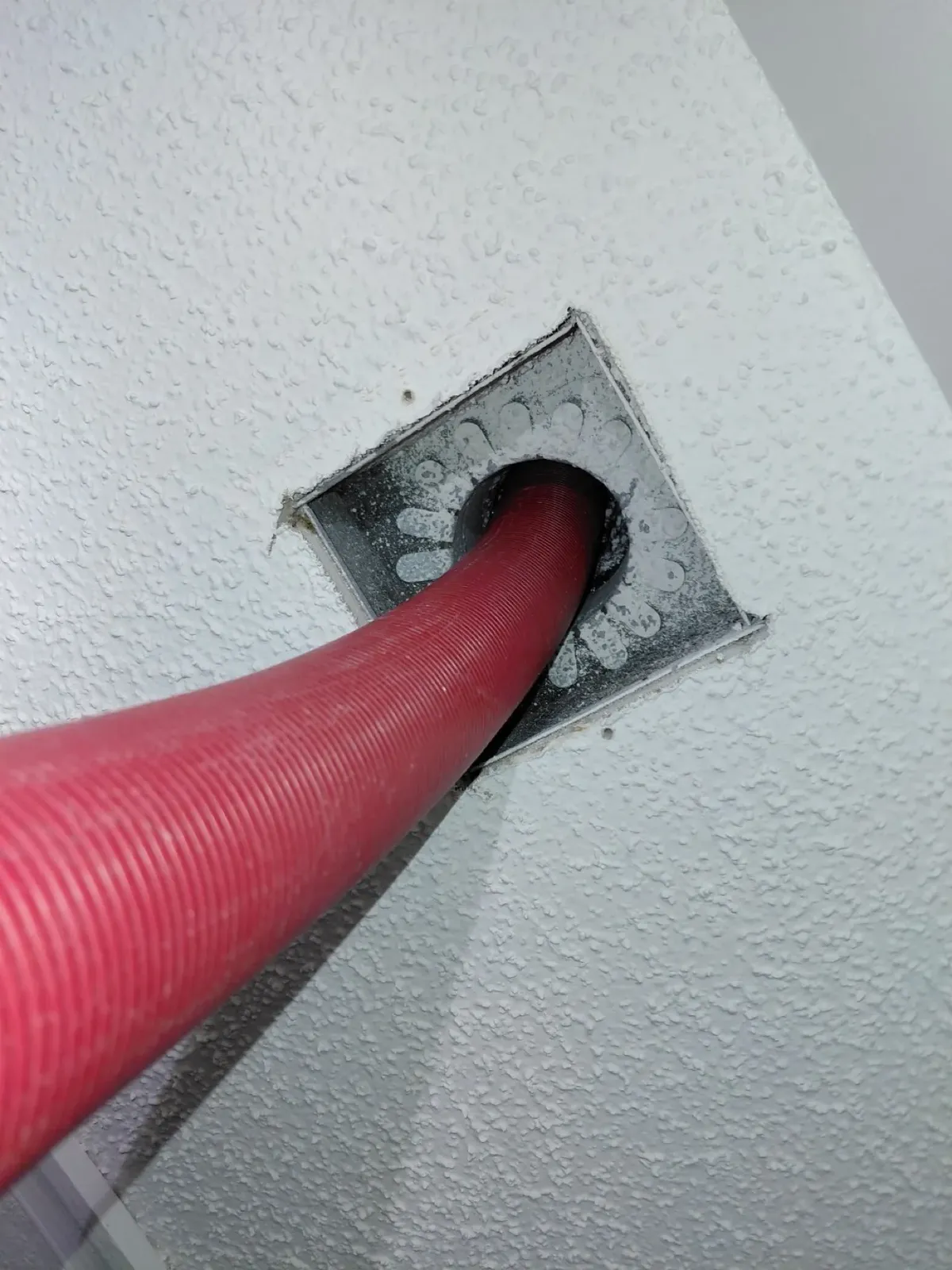
The removal process, step by step
- Inspect and locate. The coil, drain pan, and duct runs are checked to find where growth is established and where its moisture comes from.
- Seal and put the system under negative pressure. The duct system is connected to a HEPA-filtered vacuum so loosened debris moves into the machine, not into the rooms.
- Brush and vacuum every run. Supply and return ducts are agitated and vacuumed along their full length, not just at the openings.
- Clean the coil and drain pan by hand. The growth's home base gets direct attention - coil fins cleaned, pan scrubbed, drain line flushed.
- Apply a sanitizing treatment. With the surfaces clean, an antimicrobial treatment goes through the system to address what remains on them.
- Fix the moisture source. The drain, leak, or humidity problem that fed the growth is corrected, or the colony gets rebuilt on schedule.
What removal is not
It is not a spray. Fogging or spraying a product into a dirty system coats the top of the debris and leaves the colony's base - and its food - in place. It is not register wiping, which cleans the last few inches of a system whose growth sits at the air handler. And it is not a UV light: a lamp prevents growth on the coil it shines on, but it removes nothing that is already there. Each of those has a role somewhere; none of them is removal.
After the removal
A proper job ends with proof and prevention. Before-and-after photos show the state of the runs and the coil, and the moisture fix is verified - the drain flows, the leak is sealed, the pan is dry between cycles. From there, the prevention routine - filter discipline, humidity control, a yearly coil check - keeps the conditions from rebuilding. The full service is our Air Duct Cleaning, and for established growth the deeper sequence is described on our Air Duct Cleaning page.
Frequently asked questions
How do you remove microbial growth from air ducts?
Mechanically first: the ducts are brushed and vacuumed under negative pressure, the coil and drain pan are cleaned by hand, and a sanitizing treatment is applied to the cleaned surfaces. Then the moisture source that fed the growth is fixed. Any method that skips the physical removal - sprays, fogging, wiping registers - leaves the colony and its food in place.
Can I remove microbial growth from my ducts myself?
You can clean what you can see and touch: vent covers, registers, and the first foot or two inside each opening. The growth that matters sits where household tools cannot reach - the full duct runs, the trunk lines, and above all the coil and drain pan at the air handler. A vacuum and brush from the register end does not clean a system.
Does sanitizing alone remove microbial growth?
No. Sanitizing treats a surface; it does not remove the colony, the biofilm, or the debris feeding it. Applied to a dirty system it treats the top layer and leaves the base alive. The order matters: physical cleaning first, sanitizing second, moisture fix alongside - that sequence is what makes the result last.
Do ducts with microbial growth need to be replaced?
Usually not. Sound ductwork cleans up well. Replacement enters the conversation when the material itself has failed - fiberglass lining eroding to raw fiber, duct board that has been wet through, or runs that are crushed or disconnected. An honest inspection separates the two cases instead of selling replacement for a cleaning problem.
Is it safe to stay in the house during the removal?
Yes. A properly run cleaning keeps the duct system sealed under negative pressure with HEPA-filtered equipment, so debris travels into the machine rather than into your rooms. Most customers stay home through it; stepping out is a preference about noise and routine, never a requirement.