In this article
What biofilm is
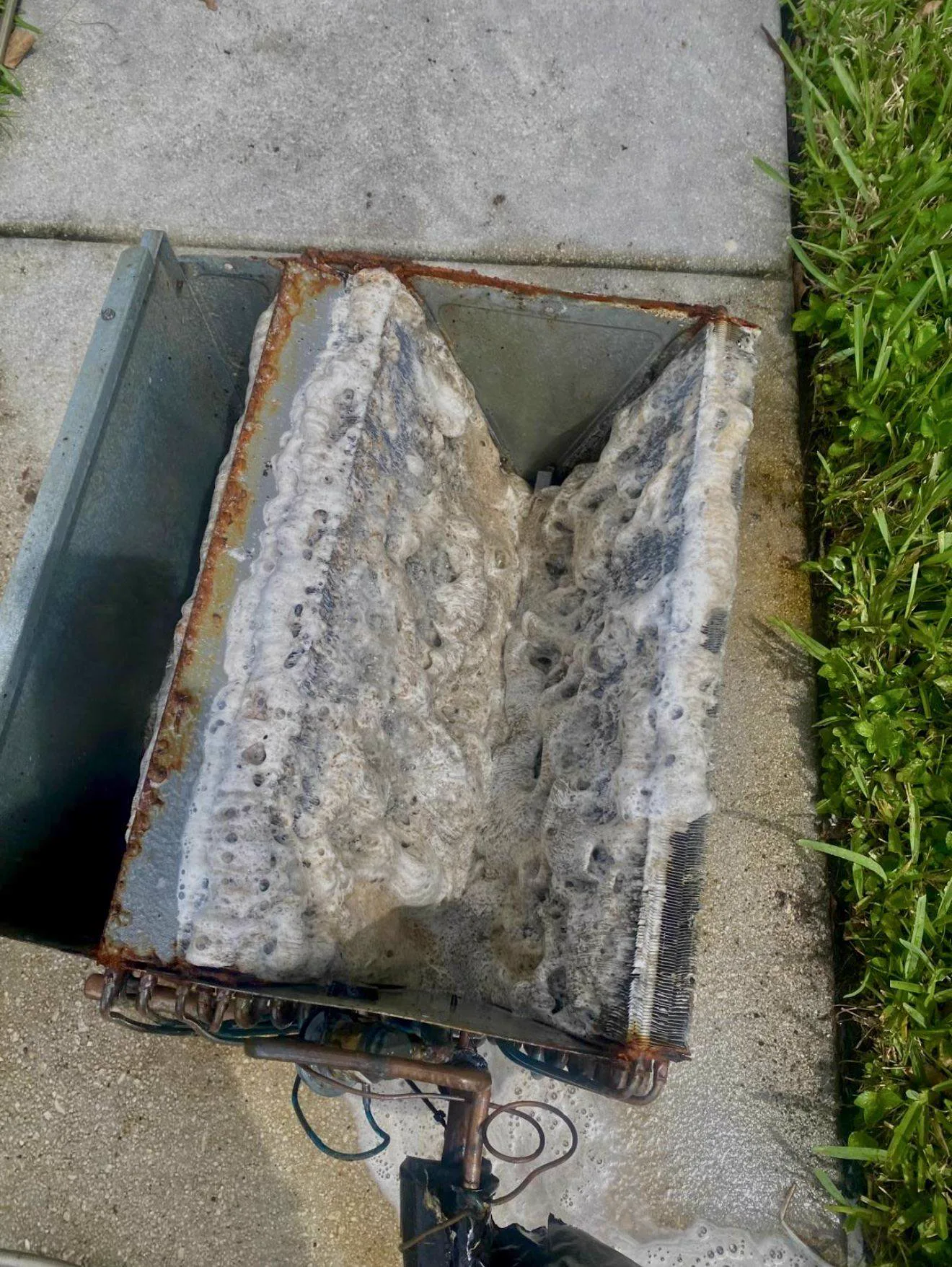
Biofilm is the form microbial growth takes on a wet surface: a community of mold and bacteria embedded in a slimy layer they produce themselves, stuck fast to whatever they are growing on. On an evaporator coil, that surface is a dense stack of thin aluminum fins. The film coats the fins and bridges the narrow gaps between them, and unlike loose dust it does not blow off or rinse away with a hose - it is attached, alive, and regrowing from its base if it is only knocked back. For the bigger picture, see what microbial growth in air ducts is.
What it does to cooling
A coil does its job by moving heat from your indoor air into the refrigerant, across those fins. A biofilm layer insulates the fins, so each pass of air gives up less heat. At the same time, growth and the debris it traps narrow the fin gaps, so less air passes at all. The system answers the only way it can: it runs longer to reach the same temperature, cools unevenly, and struggles most on the hottest afternoons - the same symptom list as our guide to the signs your AC coils are dirty, because growth and dirt arrive together and compound each other.
Left long enough, the airflow loss can push a system toward icing on the coil, which stops cooling altogether until it thaws - and the meltwater gives the colony another soaking.
Why coils grow it so readily
The coil is wet by design: every cooling cycle condenses moisture out of the indoor air onto its fins, and in Florida that is most of the year. It is dark inside the cabinet. And despite the filter, fine dust and organic debris reach it over time - food, delivered steadily. Wet, dark, fed: the coil is the most growth-friendly surface in the house, which is why it is almost always the first place colonies establish and the place inspections look first.
The smell connection
When people describe a musty smell at startup, the coil is the most common source. Air passes over the biofilm before it goes anywhere else, picking up the odor at the start of every cycle and delivering it house-wide. If that smell is your symptom, our musty AC smell guide walks through confirming the source before you spend anything.
How coil cleaning handles it
Removing biofilm is a cleaning job, not a spraying job: the coil is accessed, the growth and debris are loosened with the appropriate coil cleaner, the fins are rinsed and straightened where needed, and the drain pan and line are flushed so the water the coil makes leaves the system. That is the work of a coil cleaning, and when growth has spread past the coil into the duct runs, it pairs with a full Air Duct Cleaning - for established growth, the sequence on our Air Duct Cleaning page applies.
Afterward, prevention keeps the coil from re-growing on the same schedule: a clean filter, a clear drain, and optionally a UV lamp treating the coil surface between visits - the routine in our prevention guide.
Frequently asked questions
Can I clean the growth off my coil myself?
You can keep the filter fresh and the drain line clear, and those matter. The coil itself is a harder DIY case: access is tight, the fins bend if you look at them wrong, and household cleaners can damage fin coatings. A matted, grown-over coil is a professional cleaning - the fins need the growth removed without being crushed flat in the process.
Does growth on the coil raise my power bill?
It pushes in that direction, yes. An insulated, airflow-choked coil makes the system run longer to deliver the same cooling, and longer run time is power used. The size of the effect depends on how coated the coil is - which is one more reason the symptom to act on is longer cycles and weaker cooling, not the bill alone.
How often do AC coils need cleaning?
Have the coils checked once a year and cleaned whenever the check says they need it - for most South Florida homes that works out to a professional cleaning about once a year, because the coil here is wet and working most of the year. A coil under a UV lamp and a disciplined filter routine can stretch the interval; the check is what decides.
Will a UV light stop coil growth from coming back?
It is the best tool for exactly that job. A lamp mounted at the coil treats the surface continuously, so growth cannot re-establish between cleanings the way it does on an untreated coil. It does not clean a coil that is already grown over - cleaning comes first, then the lamp keeps it that way.