In this article
Two coils, one job
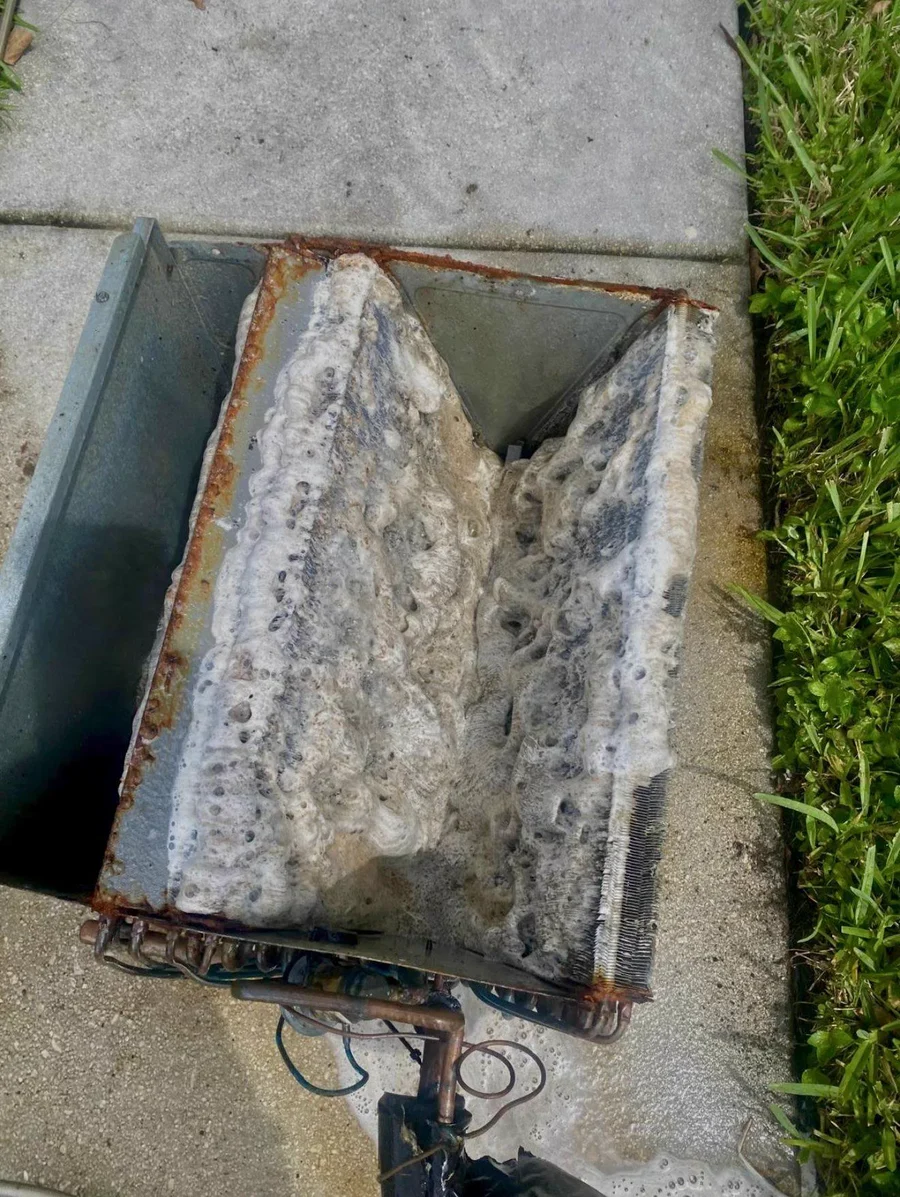
Your AC has two coils that trade heat. The evaporator coil, inside the air handler, pulls heat and moisture out of your indoor air. The condenser coil, in the outdoor unit, dumps that heat outside. Air has to move freely across both, and the metal fins have to touch the air - anything coating those fins is insulation in exactly the wrong place.
The two coils get dirty differently. The indoor coil collects whatever slips past the filter - fine dust, dander, and moisture, the mix that grows musty. The outdoor coil collects grass clippings, leaves, pollen, and salt air corrosion near the coast. The signs overlap, and a home usually shows several at once.
Sign 1: the cooling got weaker and the cycles got longer
A coated coil cannot move heat at the rate the system was built for, so the AC runs longer to reach the same temperature - and on the hottest afternoons it may never quite get there. Rooms feel a degree or two warmer than the thermostat says, and the system that used to cycle off now runs through the afternoon.
This is the sign most people notice first, and it is the one most often blamed on the age of the unit. Age matters, but a 10-year-old system with clean coils will out-cool a 6-year-old system breathing through a mat of dirt.
Sign 2: humidity stays high indoors
The evaporator coil is also your dehumidifier - moisture condenses on it and drains away. A dirty coil does that job badly: less surface contact, uneven temperatures, and standing grime that holds water instead of shedding it. The house reaches temperature but feels clammy, and bedding and bathrooms never quite dry out.
In South Florida this sign matters as much as temperature. A home that stays humid is a home where musty smells and growth get started - the same chain our musty AC smell guide traces from the other end.
Sign 3: ice on the lines or the coil
When a coil is dirty enough to choke airflow, its temperature drops below freezing and the moisture on it turns to ice - frost on the copper lines, ice on the coil itself, sometimes a puddle under the handler after it melts. Ice is a late sign: by the time a coil freezes, it has usually been dirty for a long while.
If you see ice, turn the cooling off and run the fan to thaw it, and do not just restart and hope - the cause is still there. Our AC freezing up guide covers the full diagnosis, including the causes that are not dirt.
Sign 4: a musty smell at startup, and a filter that loads fast
The indoor coil is cold and wet all summer, and the dust that reaches it sticks and stays damp - an ideal surface for microbial growth. The smell is strongest in the first minutes of a cycle, when air first pushes across the growth. If your filter also loads up with dirt unusually fast, the same dust stream is reaching the coil behind it.
You can confirm the outdoor half yourself: look at the condenser through its grille. A visible mat of clippings, cottony pollen buildup, or dirt across the fins is the outdoor coil asking for the same attention.
What cleaning involves - and what a garden hose cannot do
For the outdoor coil, a gentle rinse from a hose (never a pressure washer - it folds the fins flat) clears surface debris and is fine homeowner maintenance. The indoor evaporator coil is a different job: it sits inside the air handler near electrical components and the drain, and real cleaning means opening the cabinet, applying coil cleaner, working the buildup out of the fin pack, and flushing the drain it all runs into. Manufacturers themselves direct homeowners to leave deep evaporator cleaning to a professional.
A professional AC coil and blower cleaning - our complete A/C wash - also handles the blower wheel, which coats with the same dirt and moves less air as it does. It is the core of what AC cleaning means when the phrase is used properly. Our coil cleaning guide walks through the process step by step.
Frequently asked questions
How can I tell if my evaporator coil is dirty?
The signs are indirect because the coil is inside the air handler: weaker cooling, longer cycles, indoor humidity that stays high, ice on the refrigerant lines, and a musty smell at startup. A technician confirms it in minutes by opening the cabinet - the coil face is either bright metal or visibly matted with dirt.
Can a dirty coil make my AC blow warm air?
It can make the air noticeably less cold, especially on hot afternoons when the system runs at its limit. Truly warm air usually means something else - a failed compressor, low refrigerant, or a system running in fan mode. Our guide on an AC blowing warm air separates the causes.
How often should AC coils be cleaned in Florida?
Checked every year and cleaned as condition demands - for many South Florida homes that works out to a professional coil cleaning about once a year, because our systems run close to year-round and accumulate roughly double the runtime of a northern system. Homes with pets, dust, or coastal salt air land on the shorter interval. Our page on how often to clean your AC breaks it down by part.
Is coil cleaning the same as AC cleaning?
Coil cleaning is the heart of AC cleaning, but a complete AC cleaning also covers the blower wheel, the drain line and pan, and the cabinet - the full air handler. A tune-up is different again: it checks and adjusts the system rather than deep-cleaning it. Our comparison of AC cleaning vs. AC maintenance explains where each one stops.