In this article
A dryer dries with airflow, not just heat
A dryer does three things: it heats air, tumbles clothes through that air so the air picks up moisture, and pushes the wet air out of the house through the vent. The third step is the one that fails. A full load can hold well over a gallon of water, and every drop of it has to leave through a duct about four inches wide.
When that path narrows, the hot wet air cannot get out fast enough. It stays in the drum, already saturated, unable to pick up more water. The clothes come out hot and damp - and running a second cycle changes nothing, because nothing about the air has changed. That is why two-cycle drying points at airflow first, heat second.
The vent causes, in the order to check them
- The lint screen film. Dryer sheets and fabric softener leave an invisible film on the screen that chokes airflow while looking clean. Hold the screen under a faucet - if water pools instead of running through, scrub it with a brush and dish soap.
- The crushed transition hose. The short hose behind the dryer gets kinked or crushed flat when the machine is pushed back. A few inches of crush can cut airflow in half.
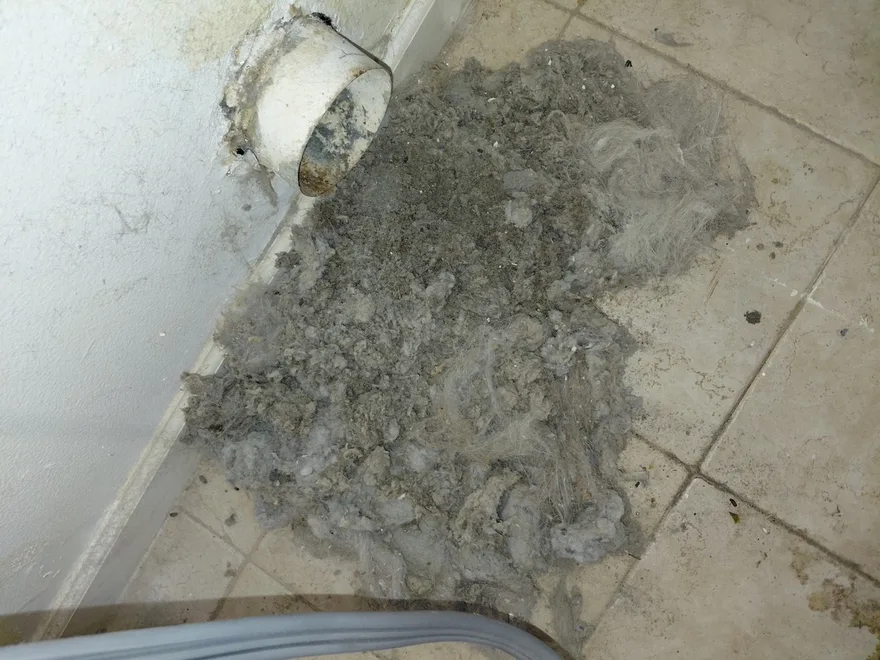
- The lint-packed vent run. Lint that slips past the screen settles along the run - at every turn, every sag, every screw tip. Roof-exit runs and long condo runs pack fastest, and Florida humidity makes the lint mat heavier.
- The blocked exterior cap. The outside flap can be painted shut, stuck with lint, or packed with a bird or lizard nest - a South Florida specialty.
Our list of dryer vent cleaning signs covers the same ground from the symptom side.
Two tests you can run in ten minutes
The cap test. Run the dryer on a heat cycle and go outside to the vent cap. You should feel a strong, steady stream of warm air and see the flap held open. A weak trickle, or a flap that barely lifts, means the path is restricted somewhere between the drum and that cap.
The half-load test. Run a half load of ordinary clothes - not towels - on a timed cycle. If a small load still needs a second cycle with a clean screen, the problem is not load size; it is the vent or the machine. That narrows it before anyone charges you for either.
The causes that are not the vent - honestly
Sometimes the vent is clear and the machine is at fault: a heating element that has partially failed (long cycles, some heat), a cycling thermostat that cuts heat early, or moisture-sensor bars coated with softener residue that misread damp clothes as dry and end the cycle early. A washer that is not spinning properly also hands the dryer clothes holding far more water than they should.
Those are appliance repairs, and we do not do them - we clean vents. If we clean your vent and test the airflow strong at the cap, and loads still take two cycles, we will tell you plainly that the machine is next, rather than sell you a second visit. A dryer that produces no heat at all is also a machine problem, not a vent problem.
Why it matters beyond the wasted hour
A restricted vent makes the dryer run hotter and longer on every load. That is wasted electricity, extra wear on the heating element and motor - and it is a fire issue. The U.S. Fire Administration identifies failure to clean the vent as the leading factor in home clothes dryer fires, because lint packed in a hot duct is fuel sitting next to a heat source.
A professional dryer vent cleaning clears the full run - screen slot, transition hose, the entire duct to the outside, and the cap - and confirms airflow at the cap before we leave. It is the one fix that addresses all four vent causes at once. Our dryer vent fire safety page covers the safety side in full.
Frequently asked questions
Why are my clothes still damp after a full dryer cycle?
Most often because the hot, wet air cannot leave the drum fast enough - a restricted vent keeps saturated air circulating instead of exhausting it. Check the lint screen film and the airflow at the outside cap first. If both are clear and loads are normal size, the cause is inside the machine.
How do I know if it is the vent or the dryer?
Run the cap test: with the dryer on a heat cycle, the outside vent cap should blow a strong stream of warm air with the flap held open. Weak air means a restricted vent path. Strong air with damp clothes points at the machine - element, thermostat, or moisture sensor - which is an appliance repair.
Can a clogged vent damage my dryer?
Yes. Restricted airflow makes the dryer run hotter and longer, which wears the heating element, motor, and belts faster, and can trip the high-limit thermostat or blow a thermal fuse - a common repair that usually traces back to the vent. Clearing the vent is how you stop replacing parts.
How often should a dryer vent be cleaned in Florida?
Once a year is the baseline, and twice a year is common for large households, roof-exit runs, and long condo vents. Florida humidity makes lint mat down heavier and faster than in dry climates. Our guide on how often to clean your dryer vent in Florida explains what pushes a home to the shorter interval.