In this article
If you own a condo in South Florida, there's a letter you've probably received — from your association, once a year, reminding you that your dryer vent must be professionally cleaned and a certificate filed with the management office. It can feel like bureaucratic box-checking. It isn't. Here's why condos treat dryer vents so seriously, what the requirement actually involves, and how to get it done without the headache.
Why condos are different from houses
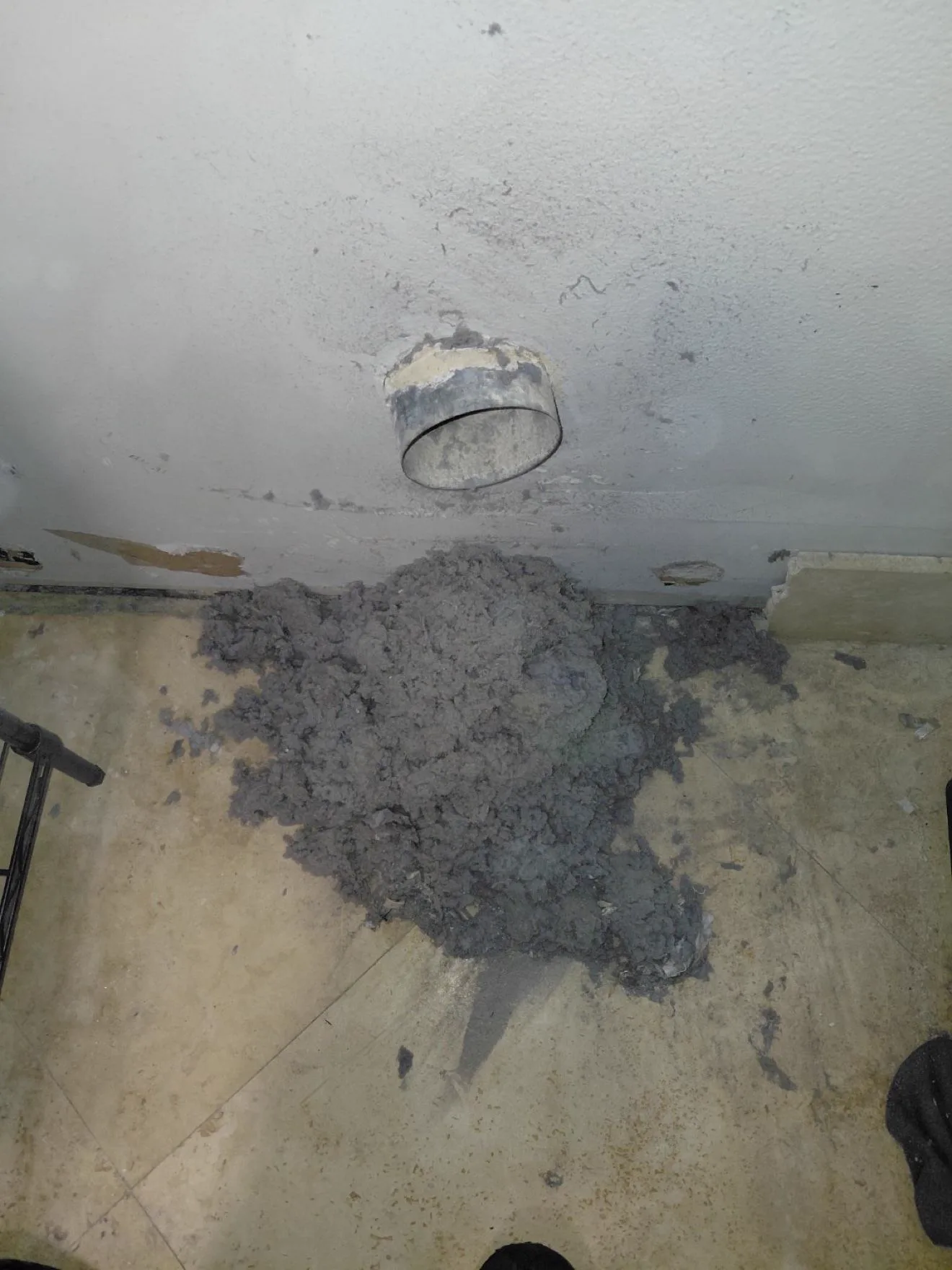
In a house, a dryer vent usually runs a few feet to an outside wall. In a condo — especially a high-rise — the vent may run 25 feet or more: up through a chase, across a ceiling, sometimes all the way to a roof exit shared with a vertical shaft. Lint builds up along every foot of that run. And the risk math is different: a dryer fire in a single-family home endangers one family; in a tower, it endangers a building. Lint-clogged dryers are behind thousands of house fires nationally every year, which is why fire-safety guidance and condo insurers both push annual cleaning — and why your association enforces it.
What associations typically require
Rules vary by building, but the common pattern across Broward, Miami-Dade, and Palm Beach condo and HOA communities looks like this:
- Professional dryer vent cleaning on a set cycle — most commonly once a year
- A certificate of completion filed with the management office by a deadline
- A licensed and insured vendor — associations increasingly require proof of the vendor's license and insurance before work is done in the building
- Scheduled access windows in some buildings, where management coordinates unit entry dates
Ignore the letter and the consequences range from fines to liability if your clogged vent is ever tied to a fire or water-damage claim (a straining dryer also pumps moisture where it shouldn't go). The cleaning itself is quick — the paperwork is the point.
The certificate: what it is and what you get from us
A certificate of completion is simply documentation that a professional cleaned your unit's dryer vent on a specific date. When Fair Air cleans a condo dryer vent, you get documentation for your association file — the service date, your unit, what was cleaned, and the condition found — plus photos from the run itself. Fair Air Solutions is Florida-licensed (CAC1824294) and insured, which is what management offices ask vendors for. Keep your copy with your condo documents; send the office theirs.
Long runs, roof exits, and booster fans
High-rise vents come with hardware houses don't have: booster fans installed mid-run to push air through long vents, in-line lint traps, and roof terminations with screens that clog from above. A proper condo cleaning addresses the full path — from the dryer connection to the exterior exit — and checks the booster fan, because a dead booster makes even a clean long vent perform like a clogged one. Tell us when you book whether your vent exits through a wall or the roof, and whether your building has booster fans; it helps us send the right equipment the first time.
Who books: unit owners vs. the association
Both, in different setups. In most buildings, individual owners are responsible for their own unit's vent and book their own service — that's when you call us at (954) 687-9356, we coordinate with your building's access rules, and you get your certificate. In others, the association contracts building-wide cleaning days, where a crew services many units on a schedule — we run those too, through our commercial services, with per-unit documentation for the office. If you're on a board or manage a building and your compliance rate is a headache, a building-wide program is usually cheaper per unit and ends the letter-writing cycle.
How a condo appointment works
Most condo dryer vent cleanings take under an hour per unit. We coordinate with building management on access, parking, and elevator rules, protect the laundry area, clean the full vent run, verify airflow at the exit, and leave you the documentation. Many owners pair the visit with a duct cleaning or AC check while a tech is already in the unit — and if we spot an actual AC repair issue during that check, we can quote it on the spot, in writing. One visit, everything handled, certificate in hand.
Frequently asked questions
Why does my HOA require dryer vent cleaning every year?
Because in a condo, a clogged dryer vent is a building problem, not just a unit problem. Condo vents are long — often 25 feet or more, sometimes to a roof exit — so lint builds up fast, dryers overheat, and dryer-related fires endanger the whole building. Annual professional cleaning with documentation is how associations manage that risk, and insurers often expect it.
What is a certificate of completion, and do you provide one?
It's documentation that a professional cleaned your unit's dryer vent on a specific date — what your management office files as proof of compliance. Yes: after a condo dryer vent cleaning, we provide documentation with the date, unit, work performed, and condition found, plus photos. Fair Air Solutions is Florida-licensed (CAC1824294) and insured.
Who is responsible for the dryer vent — me or the association?
In most South Florida condos, the unit owner is responsible for their own vent and books their own service, then files the certificate with the management office. Some associations instead run building-wide programs and contract the whole building at once — we handle both. Your association's letter will tell you which setup your building uses.
My dryer vents through the roof. Can you still clean it?
Yes. Roof-exit and long vertical runs are standard in South Florida high-rises. We clean the full path from the dryer to the exterior termination and check any booster fan on the run, since a failed booster makes even a clean vent perform badly. Let us know your vent exits through the roof when you book.
How long does a condo dryer vent cleaning take?
Most units take under an hour, including setup, the full run cleaning, and an airflow check at the exit. We coordinate with your building's management on access and scheduling, and you get your certificate documentation at the visit.