In this article
What short cycling actually is
Short cycling is when your AC starts, runs for just a few minutes, shuts off, and starts again - over and over. A healthy system runs in long, steady cycles of 15 to 20 minutes to cool the house evenly and pull humidity out of the air. Short cycles never finish the job, so the house stays humid and uneven, the temperature swings, and the system wears out years early.
If your outdoor unit clicks on and off every few minutes, or your rooms never quite feel dry even at the set temperature, your system is probably short cycling. It is one of the most common problems we find in South Florida homes, and it is almost always fixable once the cause is found.
The most common causes in Florida
- A clogged air filter. The number one cause we find. A filter chokes airflow, the coil gets too cold, and the system shuts down to protect itself - then starts again, and repeats.
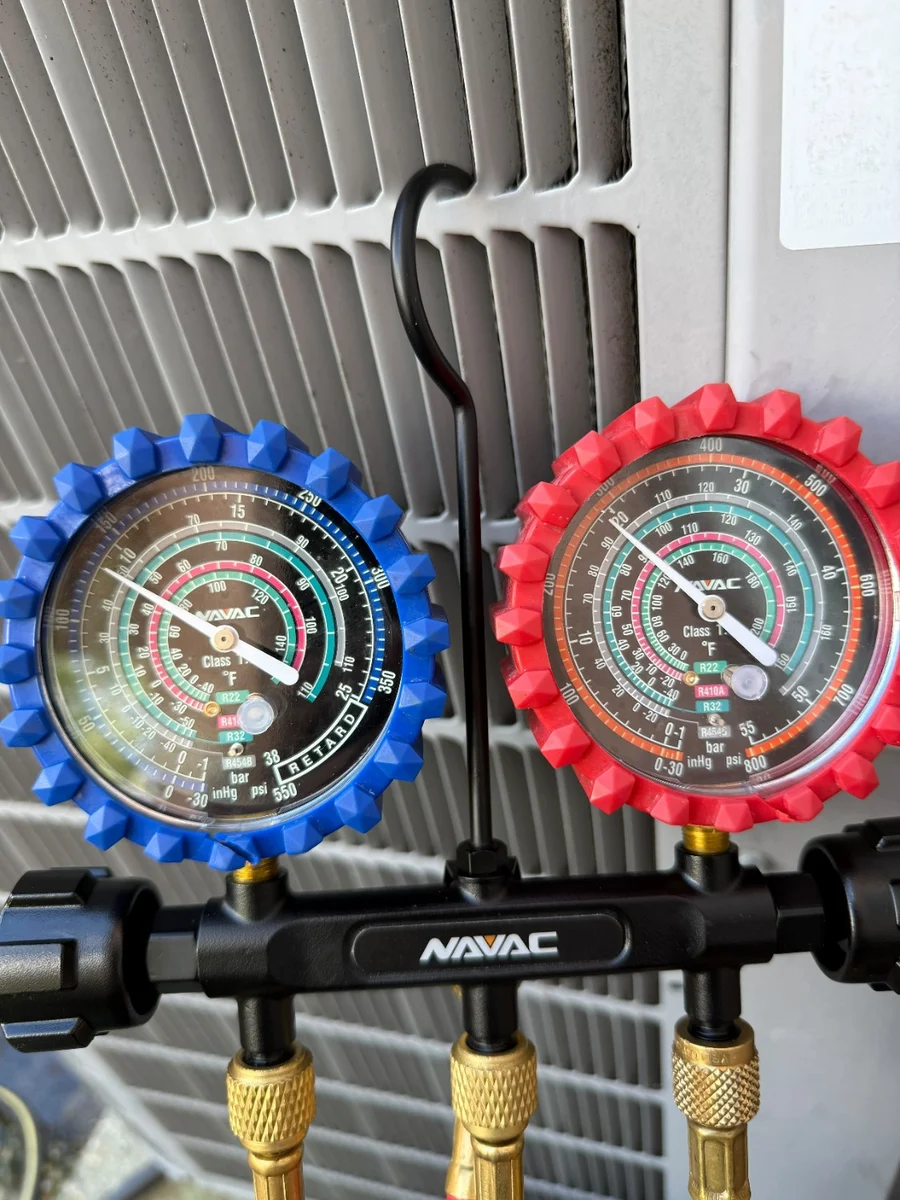
- Low refrigerant from a leak. Low charge drops the coil temperature, the coil can freeze, and the system cycles off. Topping it off without finding the leak just buys a few weeks.
- A dirty evaporator coil. A coil coated in dust and buildup cannot move heat, so it runs cold and cycles off. This is exactly what AC coil cleaning fixes.
- An oversized unit. A system too big for the house cools the air fast and shuts off before it dehumidifies - so the house feels clammy, and the unit cycles constantly. This is a sizing problem from the original install, and it needs a real fix, not a bigger filter.
- A thermostat in the wrong spot. A thermostat near a supply vent, in direct sun, or next to a heat source reads the wrong temperature and tells the system to stop too soon.
- A failing blower or compressor. When the blower cannot move enough air, or the compressor is wearing out, the system protects itself by cycling off.
Why it wears your system out
Every start is the hardest moment for the compressor - the most expensive part of your AC. Short cycling multiplies those starts many times a day, which is why systems that short cycle tend to die years early.
It also never runs long enough to pull humidity out of the air, so the house feels clammy even at the right temperature - and in Florida humidity, that clammy feeling is what feeds mold and musty smells. And the electric bill climbs, because starting takes more energy than running steadily. A system that short cycles is a system working hard and accomplishing little.
What you can check before calling
- Check the filter. If you cannot see light through it, replace it, and give the system an hour to settle. If the cycling continues with a clean filter, the cause is deeper.
- Check the thermostat. Is it in direct sun, near a supply vent, or next to a lamp or TV? A thermostat in a bad spot will cycle the system all day.
- Look at the refrigerant lines. Ice or frost on the copper lines at the outdoor unit means the coil is freezing - turn the cooling off, run the fan only to thaw it, and call us.
- Listen. Clicking every few minutes from the outdoor unit, or the blower starting and stopping, confirms the pattern - note how long each run lasts, and tell the tech when you call.
What a technician checks
Our inspection starts with the easy things - the filter, the thermostat placement, and the airflow at the vents - then moves to the system itself: the coil condition, the refrigerant charge, the blower, and the electrical parts that control cycling. We show you what we find, explain the cause in plain words, and give you one exact price in writing before any work begins.
Most short cycling has a straightforward fix: a filter, a coil cleaning, a refrigerant leak repair, or a thermostat moved to the right wall. What matters is finding the cause instead of guessing at it. If your AC is turning on and off every few minutes, call us at (954) 687-9356 - every day of short cycling is extra wear on your compressor. You can also read our Florida AC maintenance guide for the twice-a-year checks that catch these problems early.
Frequently asked questions
What is short cycling?
Short cycling is when your AC starts, runs for just a few minutes, shuts off, and starts again - over and over. A healthy system runs in long, steady cycles of 15 to 20 minutes to cool the house evenly. Short cycles never finish the job, so the house stays humid and uneven, and the constant starting and stopping wears out the compressor - the most expensive part of the system.
What causes an AC to short cycle?
The usual causes are a clogged air filter choking airflow, low refrigerant from a leak, a frozen evaporator coil, an oversized unit that cools the air too fast without dehumidifying, or a thermostat placed in a bad spot - near a supply vent, in direct sun, or next to a heat source. In Florida homes, dirty coils and restricted airflow are among the most common culprits, and they are exactly what a cleaning and inspection find first.
Is short cycling bad for my AC?
Yes - it is one of the hardest things on a system. Every start is the hardest moment for the compressor, and short cycling multiplies those starts many times a day. It also never runs long enough to pull humidity out of the air, so the house feels clammy even at the set temperature, and the electric bill climbs because starting takes more energy than running steadily.
Can a dirty filter cause short cycling?
Yes - it is the most common cause we find, and the easiest to fix. A clogged filter starves the system of air, the coil gets too cold, and the system shuts down to protect itself - then starts again, and repeats. Check the filter first: if you cannot see light through it, replace it, and give the system an hour to settle. If the cycling continues with a clean filter, the cause is deeper in the system.
When should I call a technician about short cycling?
Call as soon as you notice the pattern - every day of short cycling is extra wear on the compressor. If you hear the outdoor unit clicking on and off, see ice on the refrigerant lines, or the house never feels dry even at the right temperature, do not wait. Call us at (954) 687-9356 - we will inspect the filter, coil, refrigerant, and thermostat, show you what we find, and give you one exact price in writing before any work begins.