In this article
The short answer: heat rises, and upstairs ductwork pays for it
If your downstairs is comfortable and your upstairs feels like a different climate, you are not imagining it — and your AC may not even be broken. Hot air rises, the sun pounds your roof all day, and in most two-story South Florida homes the upstairs ductwork runs through the hottest space in the house: the attic. By the time cooled air travels through a hot attic, past any leaks or buildup along the way, what's left arriving at your upstairs vents may not be enough to win the fight.
The good news: in our experience, a hot second floor is more often an airflow and duct problem than a dying air conditioner. Those are fixable — usually for far less than replacing a system.
The usual causes we find
- Leaking ducts in the attic. Joints separate over time, and cooled air spills into the attic instead of reaching upstairs rooms. The rooms farthest from the air handler — usually upstairs bedrooms — suffer first.
- Buildup restricting airflow. Dust and debris inside the ducts, and a dirty evaporator coil, choke the volume of air the system can push. Weak airflow shows up at the far ends of the system first.
- Too few or undersized returns upstairs. Air that can't get back to the system can't be re-cooled. Many Florida two-story homes were built with minimal return air on the second floor.
- One thermostat for two different worlds. A single downstairs thermostat shuts the system off when the first floor is satisfied — the second floor never gets a vote.
- Attic insulation gaps. Thin or displaced insulation lets ceiling heat radiate straight into upstairs rooms all afternoon.
- A system that's genuinely undersized or aging. It happens — but it should be the last conclusion, not the first sales pitch.
What you can check yourself
- Replace the filter. A clogged filter strangles airflow everywhere, and upstairs feels it most. Start here — it's the cheapest fix in the house.
- Walk the upstairs vents. Every supply vent should be fully open and unblocked by furniture, rugs, or closed dampers from a previous season.
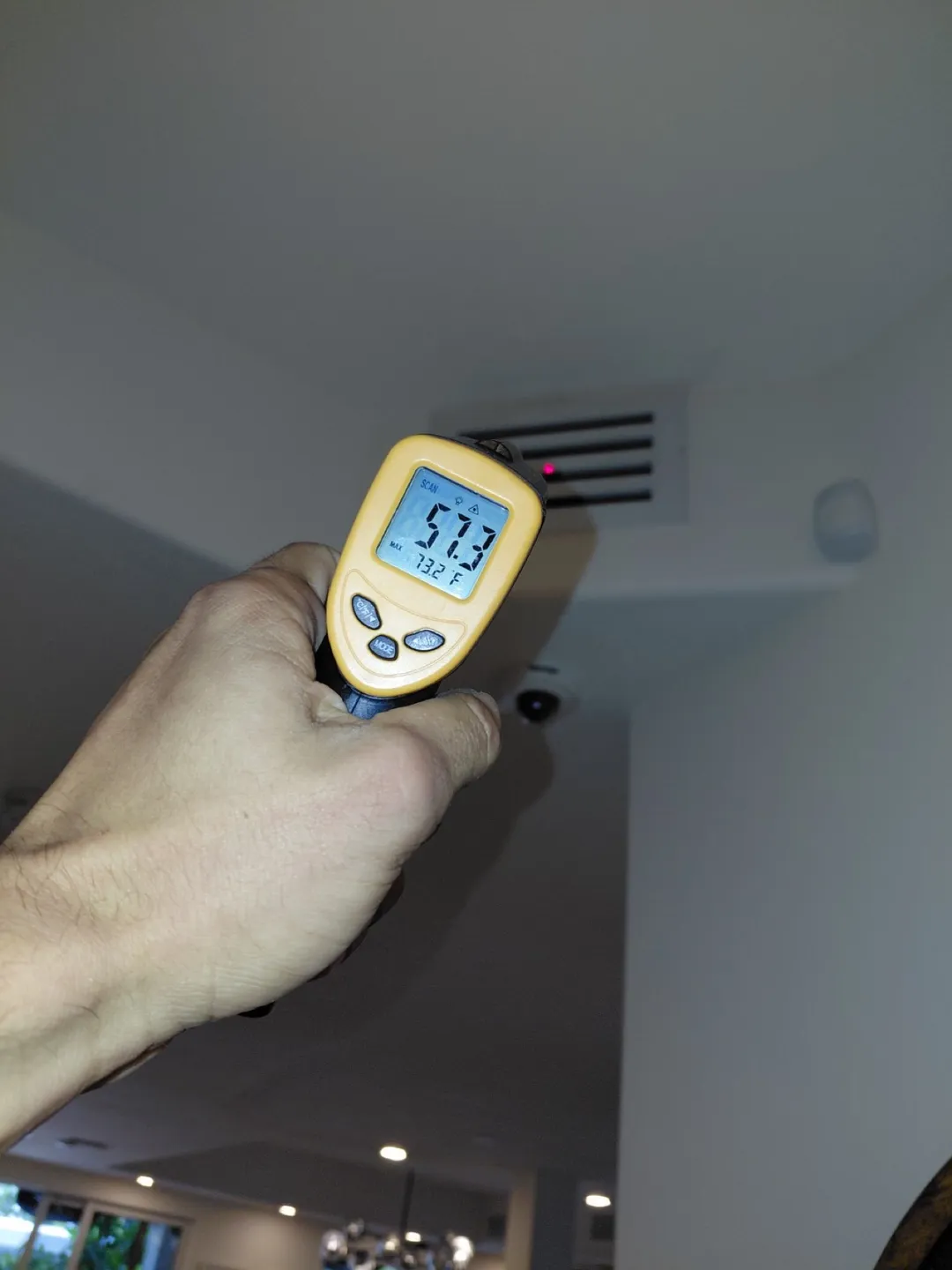
- Feel the airflow. Hold your hand at each upstairs vent while the system runs. A vent that barely breathes, compared with a strong downstairs vent, points to a duct or airflow problem on that run.
- Check the temperature gap. A simple thermometer upstairs and down tells you the size of the problem. One or two degrees is normal physics; a stubborn gap of four degrees or more means something is wrong.
- Look at the attic hatch and ceiling. A blazing-hot ceiling or a poorly sealed attic access adds heat load right where you sleep.
When to call a professional
Call when the gap survives a fresh filter and open vents — especially if the system runs almost nonstop, upstairs airflow feels weak, or your summer bills keep climbing while comfort goes down. Those are signs the system is working hard and losing: leaking or restricted ducts, a coil that needs cleaning, or an airflow balance problem. All of them are diagnosed the same way — by looking inside the system, not by guessing from the thermostat.
What our inspection covers
Our free inspection looks at the whole path the air travels: a camera look inside the ductwork to see buildup and problem areas, an airflow check at the vents, the condition of the coil and blower, and a look at the duct runs serving the second floor. Then we show you what we found and give you one exact price before any work begins — only for what your home actually needs. If the problem turns out to be something small, we'll tell you that too.
Frequently asked questions
Why is my upstairs so much hotter than my downstairs in Florida?
Three things stack up: hot air naturally rises, the roof and attic bake in the Florida sun all day, and upstairs ducts usually run through that hot attic. Add any duct leakage, buildup, or weak airflow, and the second floor gets what's left over. A small difference is normal; a big one is a duct and airflow problem worth inspecting.
Can dirty air ducts cause uneven cooling between floors?
Yes. Buildup inside the ducts and on the coil restricts how much air the system can move, and the vents farthest from the air handler — typically upstairs — lose the most. Leaking duct joints in the attic make it worse by spilling cooled air before it ever reaches the room.
Should I close downstairs vents to push more air upstairs?
Generally, no. Closing vents raises pressure inside the duct system, which can increase leakage and strain the blower without fixing the real problem. Proper balancing is done by correcting the duct and airflow issues, not by shutting vents. It's a common myth that can make things worse.
Do I need a second AC system or zoning for my second floor?
Sometimes — but it's the last step, not the first. Many hot-upstairs homes improve dramatically once duct leakage, buildup, and airflow are corrected. An honest inspection comes first: if the duct system is sound and the equipment is genuinely undersized, we'll tell you that straight, and zoning or a second system becomes a real conversation instead of a sales pitch.
What does Fair Air Solutions check during an inspection for uneven cooling?
We look inside the ducts with a camera, check airflow at the upstairs and downstairs vents, inspect the coil and blower, and examine the duct runs serving the second floor for leaks and restrictions. The inspection is free, and you get one exact price before any work begins — no pressure either way.