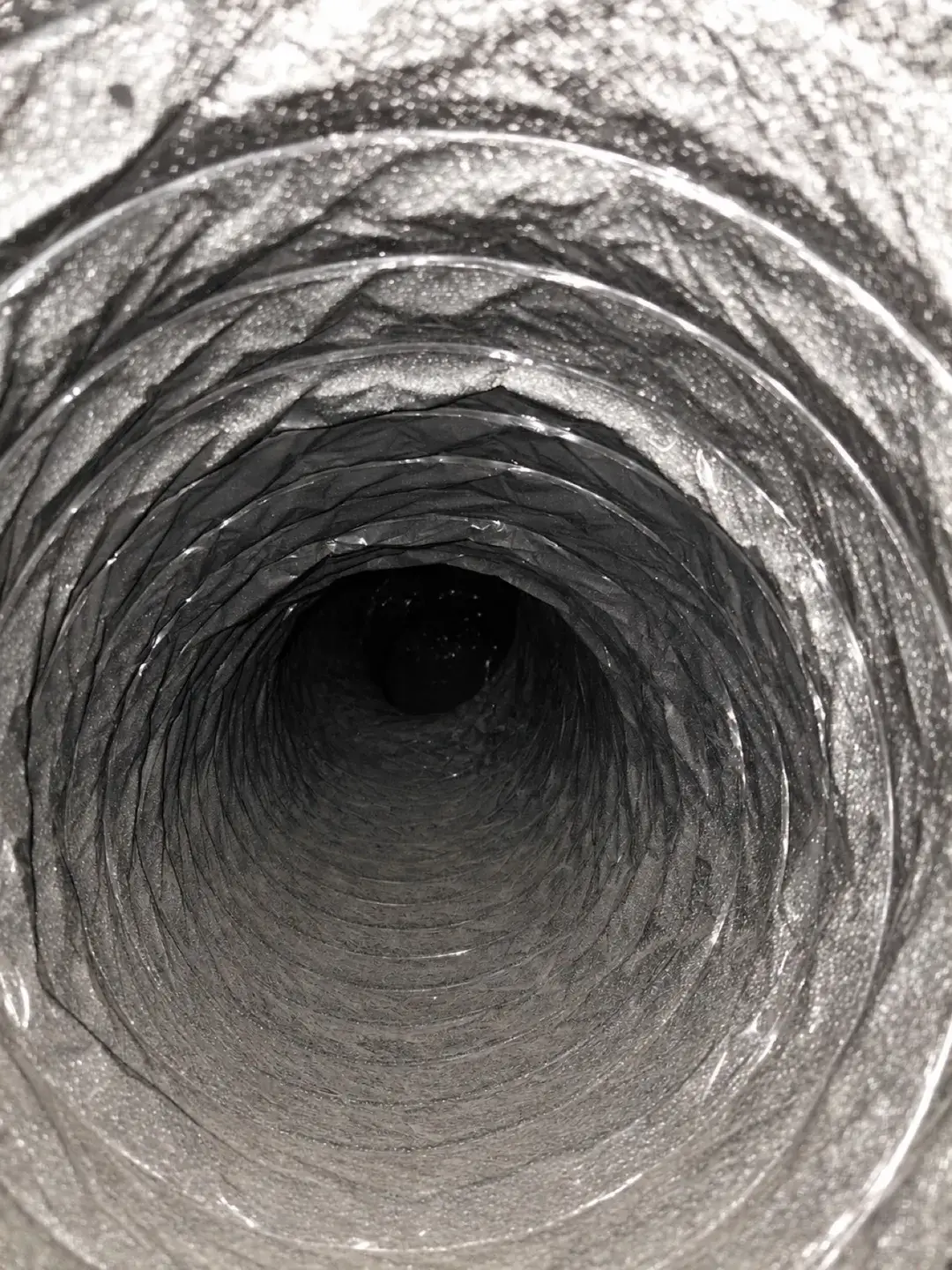
The timeline, honestly
Growth runs on a curve, not a switch. Spores are already present in normal indoor air and dust - they are not the limiting factor. Given a surface that stays wet, germination can start within a day or two; that is why the standard advice after any water event is to dry materials within 24 to 48 hours. From there, a colony becomes visible over days to weeks as it spreads across the wet area. In a duct system, translate that to: a drain clog that keeps a pan wet for a month is not a small problem that started yesterday - it is an established colony with a month of growth behind it.
Why ducts are a fast environment
An HVAC system in Florida re-wets its key surfaces on a schedule: every cooling cycle condenses water onto the coil, and the system runs most days of the year. If drainage is good, that water leaves and surfaces dry between cycles, and the clock keeps resetting to zero. If drainage is poor - a slimy line, a level pan that holds water, insulation that got wet once and never dried - the clock never resets, and the coil, pan, and nearby lining accumulate growing time continuously. The speed difference between two identical systems is almost entirely that drainage difference, plus the causes covered in what causes microbial growth in air ducts.
What slows it down
Anything that shortens wet time: a drain line that flows freely, indoor humidity kept in the 45 to 55 percent range, a filter that keeps the coil clean and airflow strong, leaks fixed before they soak materials, and water events dried within that first day or two. A UV lamp at the coil treats the wettest surface continuously, interrupting establishment where it is fastest. If growth is already established, speed stops being the question - removal is, and our Air Duct Cleaning and the treatment sequence on our Air Duct Cleaning page are the answer to that one.
Frequently asked questions
How fast does microbial growth grow in ducts?
On a surface that stays damp, growth can begin within 24 to 48 hours - the standard guidance for mold on wet materials. Becoming a visible, established colony takes days to weeks of continued dampness. In a duct system the real variable is wet time: good drainage resets the clock every cycle, poor drainage lets it run continuously.
Does microbial growth grow faster in Florida?
Generally, yes. The ingredients - warmth, humidity, and an AC system that condenses water most of the year - are present here for more of the calendar than in cooler or drier climates, and the mild winter gives systems no long dry off-season. Florida systems are not doomed to grow; they just have less margin for a clogged drain or a skipped filter.
Can microbial growth grow in ducts in winter?
It grows wherever surfaces stay wet, in any season - but winter usually slows it. South Florida systems still run and still condense in winter, just less, so wet time drops and growth slows with it. A pan that holds water grows in January too; it simply gets fewer wet hours to work with.
Does running the AC more often slow growth down?
It cuts both ways, which is why the details matter. Running cools and dehumidifies the house, but every cycle also wets the coil. A well-maintained system that drains freely benefits from running - surfaces dry between cycles. A system with a clogged drain gets wetter the more it runs. Drainage, not run time, is the deciding factor.
How fast does growth spread through the whole duct system?
It does not crawl - it establishes. Spores travel with the airstream constantly, but colonies only form where surfaces stay wet: the coil, the pan, a damp section of lining. That is why growth patterns follow water patterns, and why fixing the one wet spot usually addresses the whole system's growth at once.