In this article
The short answer
No - not when it is done right. A professional cleaning does not damage ducts, because the equipment and the method are matched to the ductwork in your home. The horror stories you hear - torn flex duct, separated joints, crushed runs - come from the wrong tool in the wrong hands: a stiff brush forced through soft flex duct, a vacuum head dragged across an old joint, or a crew that pulls on duct runs to reach them faster.
The ductwork in South Florida homes is a mix of metal trunk lines and flexible duct runs, and each type needs a different approach. A crew that treats them all the same is a crew that can do damage. A crew that inspects first, chooses the right tool for each run, and works under negative pressure is a crew that leaves your system in better shape than it found it.
What actually causes duct damage
- Stiff rotary brushes in flex duct. Flex duct is a wire helix wrapped in a plastic liner. A stiff brush can tear the liner, snag the helix, and collapse a run. Rotary brushes belong in metal ductwork, not flex.
- Pulling and yanking on runs. Flex duct that is pulled to reach a vent can separate from its collar or tear at the joint. A careful crew works through the registers and access points, and never drags a run across an attic.
- Compressed air without a vacuum. Blasting air into a duct with no vacuum running pushes debris - and pressure - into joints, the coil, and the air handler. Professional cleaning runs under negative pressure the whole time, so everything loosened is pulled out.
- DIY brushes and shop vacuums. Hardware-store duct brushes are stiff, short, and blind - they scrub what they can reach and damage what they cannot see. Home vacuums do not pull enough air to keep debris contained. Duct cleaning is not a DIY job.
- Old, brittle ductwork. Ducts that are already sagging, torn, or held together by old tape are fragile before anyone touches them. That is why an inspection comes first: to find the weak runs before work begins, not after.
Flex duct needs a gentler hand
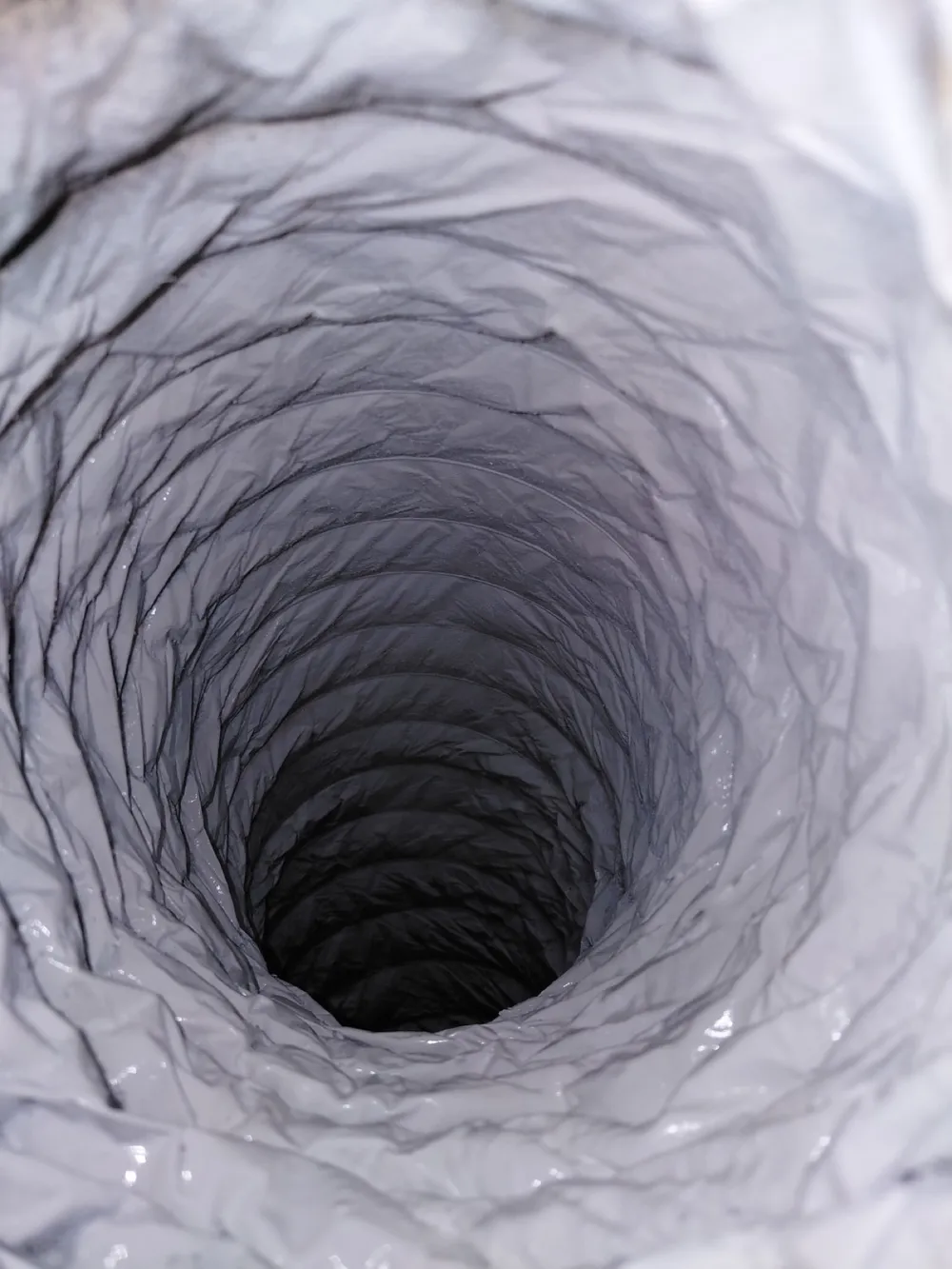
Most of the ductwork in newer South Florida homes is flexible duct - light, cheap to install, and easy to damage. Its liner tears, its insulation crushes, and a run that is pulled tight or bent sharply loses airflow even when it looks fine from the outside.
Flex runs are cleaned with a soft air-whip and a high-powered vacuum, never with a stiff rotary brush. The whip uses compressed air to knock dust loose while the vacuum pulls it out, and the tech moves it gently through the run so the liner and the helix are never stressed. When a run is already sagging or torn, a careful crew flags it and talks to you before touching it - because a damaged flex run usually needs to be replaced, not cleaned around.
Metal ductwork and what it can take
Metal ductwork - the trunk lines and plenums in most homes - is far tougher than flex duct. A rotary brush with a vacuum is the standard way to clean it, and it handles the brushing without complaint. The risks are smaller, but they are real: old joints and seals can separate if a brush head is pushed too hard, and sheet-metal screws or sharp edges inside a run can snag a tool.
That is why a careful crew checks the joints first and keeps the brush moving - cleaning the surface without grinding on one spot. And it is why we take before-and-after photos: you see the condition of your ducts for yourself, instead of taking anyone's word for it.
Red flags when a crew is in your home
- The crew starts work without opening the system or looking inside your ducts first.
- They use the same stiff brush on every run, flex or metal.
- They pull duct runs across the attic to reach a vent, or step on ductwork.
- They cannot tell you how they protect the coil and the blower while they work.
- There is no vacuum running while they brush - dust is coming out of the vents instead of going into a machine.
- They will not show you before-and-after photos, or they quote a price that changes once they are inside.
What a careful cleaning looks like
Our free inspection comes first. We open the system, inspect the ductwork hands-on, and show you what we find inside - the buildup, the duct type, and any weak or damaged runs - before recommending anything. Then we give you one exact price in writing before any work begins.
The cleaning itself runs under negative pressure from start to finish: a high-powered vacuum pulls air through the system while each run is brushed or air-whipped with the tool matched to its duct type. The coil and the blower stay protected, and every bit of debris is pulled out of the system, not pushed deeper into it. When we are done, we show you the before-and-after photos, so the improvement is documented, not promised.
If you are unsure about a crew, or worried about what a previous cleaning did to your ducts, call us at (954) 687-9356 - we will inspect what is there, show you what we find, and give you an honest answer about what your ducts need. You can also read our guide on how to choose an air duct cleaning company, or check whether your ducts should be replaced or cleaned.
Frequently asked questions
Can air duct cleaning damage your ducts?
No - not when it is done with the right equipment and by a crew that knows ductwork. Damage happens when the wrong tool meets the wrong duct: a stiff brush forced through soft flex duct, a heavy vacuum head dragged across an old joint, or a crew that pulls and twists runs to reach them. A professional cleaning uses equipment matched to your duct type, keeps the system under negative pressure while the work happens, and never yanks on a run to save time.
Is flex duct easy to damage during cleaning?
Flex duct is the most fragile duct in a South Florida home. It is a wire helix wrapped in a plastic liner with insulation around it, and it tears, kinks, or crushes if it is pulled, stepped on, or brushed too hard. That is why flex runs are cleaned with a soft air-whip and vacuum, never with a stiff rotary brush, and why a tech inspects them hands-on first - so a run that is already sagging or torn gets flagged before anyone touches it.
What about metal ducts - are they safer to clean?
Metal ductwork is far tougher than flex duct, and a rotary brush with a vacuum is the standard way to clean it. The risks are smaller, but they are still real: old joints and seals can separate if a brush head is pushed too hard, and sheet-metal screws or sharp edges inside a run can snag a tool. A careful crew checks the joints first and keeps the brush moving, so it cleans the surface without grinding on one spot.
Can duct cleaning break my AC or air handler?
The cleaning should never touch the working parts of your AC - the blower motor, the coil, and the electrical components stay protected while the ducts are worked on. Problems happen when a crew blasts compressed air into the system without a vacuum running, or when debris is pushed toward the coil instead of pulled away from it. Our cleaning runs under negative pressure the whole time, so everything loosened is pulled out of the system, not into it.
How do I know if a duct cleaning company will be careful?
Ask what equipment they use on flex duct, and whether they inspect the ductwork before they start. A crew that cannot tell you how it treats flex runs is a crew to avoid. Look for a company that shows you the inside of your ducts before and after, gives you one exact written price before any work begins, and is licensed and insured - if something did go wrong, you want a company that stands behind the work.
What should I do if my ducts were damaged by a cleaning?
Stop the work and take photos of what you can see - a torn liner, a separated joint, a crushed run. Then call the company and ask for the damage to be made right in writing. A damaged flex run usually needs to be replaced, not taped, and a separated joint needs to be resealed and secured. If the company will not own it, call us at (954) 687-9356 - we will inspect what happened, show you the damage, and give you an honest repair quote.