In this article
The honest short answer
Less than you have probably been told. The U.S. Environmental Protection Agency notes that much of the dirt in air ducts sticks to the duct walls, and that duct cleaning has never been shown to prevent health problems. A home with a good filter, changed on schedule, in a dry house can go many years without a duct cleaning and have nothing worse than a thin film of dust inside the ducts.
That is the answer most duct cleaning companies will not give you, because it does not sell cleanings. But it is only half the story. The other half is that South Florida is hard on ductwork - year-round AC runtime, high humidity, hot attics - and in the wrong conditions, a never-cleaned system crosses a line from harmless dust to a real problem. This page is about where that line is.
What actually builds up inside Florida ducts
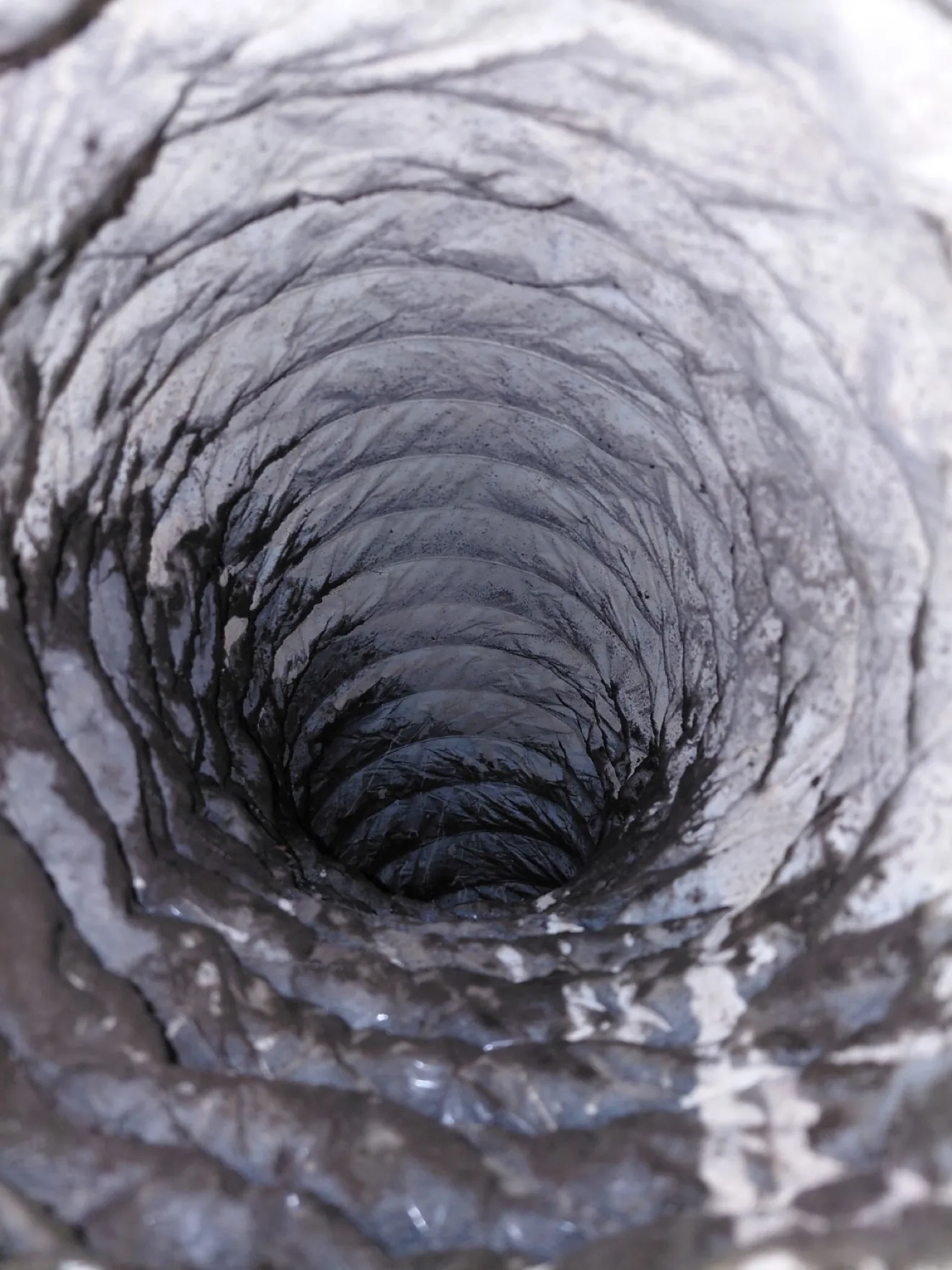
Everything your filter misses ends up somewhere, and a share of it ends up in the ducts: household dust, pet dander and hair, pollen tracked in from outside, and skin cells and fabric fibers. Add the Florida extras - fine dust from a renovation that ran while the AC was on, sand and grit near the coast, and the debris from any pest that ever found a gap in a duct joint.
Buildup is not evenly spread. It concentrates in return runs (which pull unfiltered room air back to the handler), at joints and turns, and anywhere airflow slows down. Supply ducts downstream of a healthy filter usually stay far cleaner than returns - which is why a real inspection looks at the returns first.
When "never cleaned" becomes a real problem
The EPA names the situations where cleaning stops being optional, and they match what we find in South Florida homes:
- Moisture and visible growth. If ducts have gotten wet - from condensation, a roof or plumbing leak, or a drain backup - dust plus moisture grows mold on duct surfaces. Wet ducts are the one finding that should never be left alone.
- Pest evidence. Droppings, nesting material, or insect debris inside duct runs mean animals have a way in. Cleaning comes after the entry point is closed.
- Debris actually blowing out. If dust and particles visibly puff from the registers when the system starts, the ducts are loaded past the point where dirt stays stuck to the walls.
- Renovation dust. Drywall and construction dust pulled through a running system coats everything fast - ducts, coil, and blower - sometimes in a single project.
Outside those situations, dirty-looking registers alone are not proof your ducts need cleaning. Dusty return grilles are normal - returns pull dusty room air across them all day.
The parts that suffer first are not the ducts
Here is what years of neglect actually damage, in order: the filter, the coil, and the drain line - long before the ducts themselves cause trouble. A filter that is never changed loads up, lets dust slip past, and coats the evaporator coil. A coated coil cools poorly and stays wet, which is where musty smells come from. A drain line that is never flushed grows algae until water backs up into the pan - and a wet air handler sitting above your ducts is how ducts get wet in the first place.
So the honest risk of "never cleaning anything" is not mainly a duct problem. It is a system problem that eventually reaches the ducts. Our guide to the signs your air ducts need cleaning covers the symptoms homeowners notice first.
How to tell where your home stands
You do not have to guess. A free inspection with a hands-on look inside the system settles it: we open the air handler, check the coil and blower, look into the return and a sample of supply runs, and check the drain line. If the ducts are carrying only a light film of dust, we will tell you cleaning can wait - that answer costs us a sale and earns us the next ten years of your calls.
If we find one of the real problems above - moisture, growth, pest debris, heavy loading - we show you exactly what we found and give you one exact price in writing for a full air duct cleaning before any work begins. No per-vent math, no number that changes at the door. If you are weighing whether it is worth it in a borderline case, our breakdown of whether air duct cleaning is worth it walks through that decision honestly.
Frequently asked questions
Is it bad to never clean your air ducts?
For many homes, no. The EPA notes that most dirt in ducts sticks to the duct walls and does not enter the living space, and it does not recommend routine cleaning on a schedule. Never cleaning becomes a problem when moisture, visible growth, pest debris, or heavy buildup enters the picture - those are the findings that should be cleaned, after the cause is fixed.
How do I know if my ducts have never been cleaned?
Look for the signs rather than the history: dust that puffs from registers when the system starts, musty smells that live in some rooms more than others, visible debris when a register cover comes off, and a filter that loads up unusually fast. A free inspection with a look inside the returns settles it for sure.
Can dirty ducts make my AC work harder?
Heavy buildup can restrict airflow at registers and returns, and neglected filters and coils - which usually come with neglected ducts - definitely make the system work harder. The coil and filter are the bigger factor: a coated coil and a clogged filter strain the system far more than a dusty duct wall does.
Does the EPA recommend duct cleaning?
The EPA recommends cleaning as needed, not on a fixed schedule - specifically when there is substantial visible mold growth, a pest infestation, or ducts clogged with enough debris that particles are released into the home. That as-needed standard is the one we inspect against, and we will tell you when your home does not meet it.
How long does a duct cleaning take after years of buildup?
Most single-system homes take a few hours; heavily loaded systems and multi-system homes take longer. Our page on how long duct cleaning takes breaks down what changes the clock. The price never depends on the hours - it is one exact flat quote in writing before we start.