In this article
What a UV light actually does
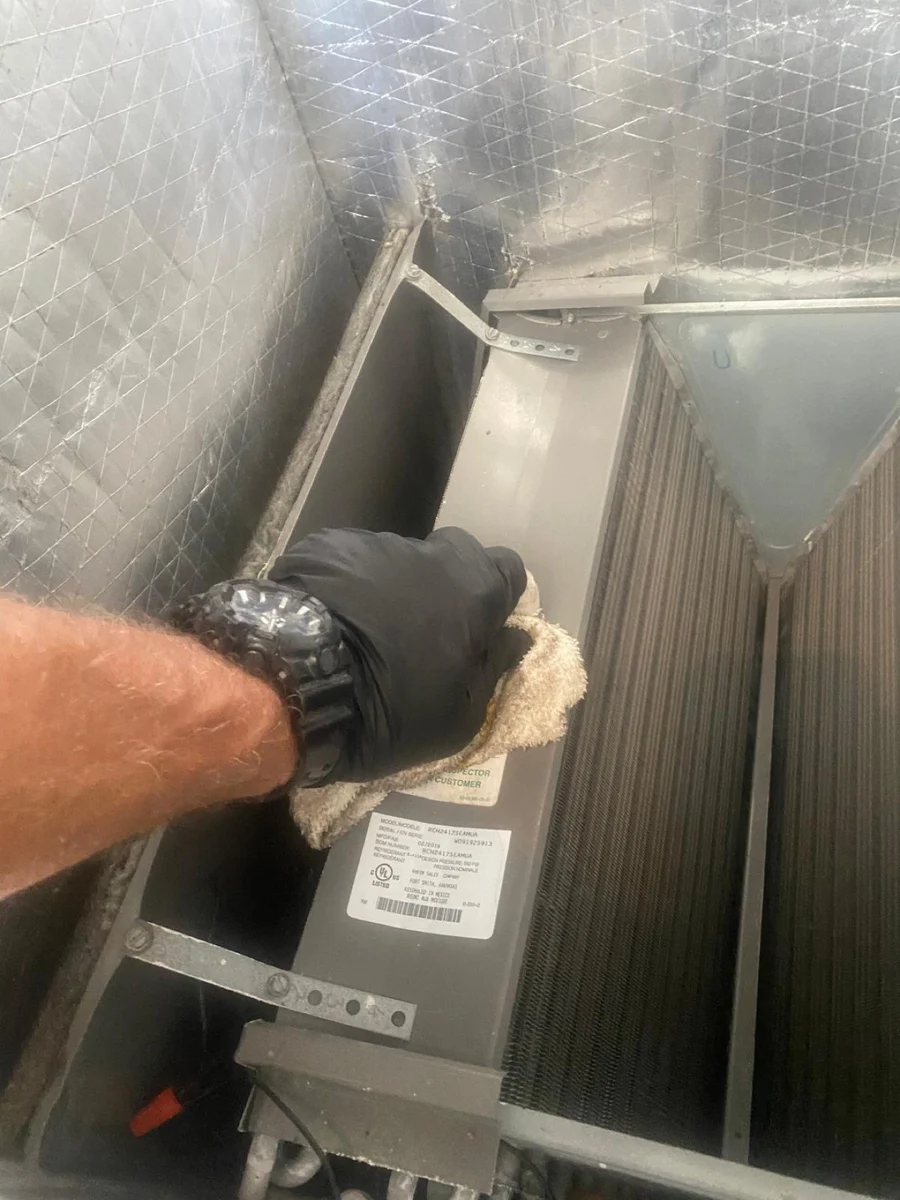
A UV lamp is mounted at the evaporator coil or in the blower compartment, where it shines continuously on the surface that stays wet all cooling season. That constant exposure keeps microbial growth from establishing on the coil and in the drain pan - the exact spot where growth starts in most Florida systems, as covered in does UV light kill mold in ducts. Air passing the lamp gets treated too, but the lamp's home turf is the surface.
Its limits are just as clear: a UV light does not trap dust, does not clean a coil that is already dirty, and does nothing for ducts that need cleaning. It is a guard, not a cleaning. The bulb also fades with time and is typically replaced every year or two - the schedule is covered in how long UV lights last. Our UV Light Installation page has the placement details.
What a whole-home air purifier actually does
A whole-home purifier is installed in the ductwork and treats the air as it circulates - the whole house's air passes through it many times a day. Depending on the technology, it targets fine dust, pollen and other allergens, and the odors and gases that a standard filter cannot catch. Where a UV light protects one surface, the purifier works on the air itself, room after room.
Its limits mirror the UV light's: it does not stop growth on a wet coil, does not clean dirty ducts, and does not replace the regular filter. It also has consumables - cells or media that need periodic service. Our Air Purification page covers the systems we install and how they are maintained.
Which one fits your problem
Match the tool to the symptom. Musty smell when the AC starts, visible growth at the coil, a drain pan that slimes up: that is a coil problem - clean first, then a UV light to keep it from coming back. Dust that settles hours after cleaning, allergy symptoms that live indoors, cooking and pet odors that linger: that is an air problem, and the purifier is the tool. Both sets of symptoms is common in South Florida, and both devices together is a legitimate answer - after the ducts and coil are clean, because neither device redeems a dirty system. If the ducts themselves are the source, start with Air Duct Cleaning and add devices once the system is clean.
Frequently asked questions
Is a UV light or an air purifier better for allergies?
For most allergy sufferers, the purifier - it works on the airborne particles, like pollen and dust, that trigger symptoms as air circulates. The exception is when growth at the coil is part of the problem; then the UV light addresses a source the purifier cannot reach. Many allergy homes end up with both, for different jobs.
Does a UV light clean the air in the whole house?
Only the air that passes the lamp, and only while it passes - the lamp's real strength is keeping the coil and pan surfaces free of growth, continuously. Whole-house air treatment is the purifier's job. Expecting a UV lamp alone to purify every room overpromises what the technology does.
Can I install both a UV light and a purifier?
Yes - they are installed in different spots and do different work, so they pair without conflict. It is a common combination in South Florida: the UV light guards the coil, the purifier treats the air, and the regular filter keeps doing its job in between.
What maintenance does each one need?
A UV bulb loses strength with age and is typically replaced every one to two years, even if it still glows. A purifier's cells or media are serviced on the manufacturer's schedule. Both are quick jobs, often handled during a regular maintenance visit.
Will either one fix a musty smell?
It depends on where the smell lives. Growth at the coil or in the ducts needs cleaning first - then a UV light keeps it from returning. Odors carried in the air itself are the purifier's territory. A smell with a dirty system behind it will outlast any device installed on top of it.